Are you tired of eating chicken week in, week-out?
Guinea fowl is available all year round and is a great alternative to chicken, with a taste learning towards pheasant. Excellent simply roasted with your usual Sunday lunch trimmings, or you can mix things up with this Asian influenced recipe.
As guinea fowl is slightly drier than chicken, marinating the bird before cooking helps to tenderise the meat and keep it moist. I used this simple WomanandHome asian influenced marinade.
This dish turned out to be lots of firsts for me. First time spatchcocking a bird. First time using lemon grass, and first time using pak choi.
If you’re also a spatchcock newbie, I’d recommend taking a look at this simple 2 minute video from the BBC before attempting anything. Then arm yourself with a good pair of kitchen scissors and a sharp knife. If you have the right tools the process is very simple. My knife however was slightly blunt so at times it turned into a bit of a hackathon, but I won in the end!
Tip: Don't discard the backbone, it'll be great in a stock!
As for lemongrass, I learned a few things about this also – whole lemongrass can be used in stews and curries (removed before eating), or chopped and used in marinades, which is what we’re going to do here. Again, a sharp knife helps as the woody stalk can be difficult to cut through with a blunt one… (I think what I need to take away from this experience is to buy new knives!).
We’re also welcoming pak choi to the family! I’ve eaten it several times at Asian restaurants but never prepared myself. It can be stir fried in a few minutes so it was a no fuss addition to the noodles , providing a burst of vitamic C, A and fibre.
Serves 2
You’ll need:
1 guinea fowl, spatchcocked and cut into 4 pieces
For the marinade
1 tablespoon fish sauce
1 tablespoon light soy sauce
2 teapsoon sesame seed oil
2 tablespoon groundnut oil
1 lime; zest and juice
2 sticks lemongrass
1 tablespoon chilli sauce
2 garlic cloves, peeled and chopped
2 inch piece of fresh ginger, peeled and chopped
1 green chilli, roughly chopped
Black pepper
For the noodles
2 nests of noodles (rice, udon work well)
1 tablespoon olive oil
1 tablespoon fish sauce
2 tablespoons light soy sauce
1 tablespoon dark soy sauce
1 red chilli, sliced
2 garlic cloves, chopped
small bunch of spring onions, sliced
4 small pak choi, leaves separated
To serve
1 lime, halved
Method:
Once you’ve mastered cutting up your guinea fowl into 4 pieces, place them in a bowl.
Mix together the marinade ingredients and pour over the guinea fowl, ensuring to mix well so all the meat is coated. Cover with cling film and place in the fridge for at least 3 hours, or overnight.
Preheat the oven to 180 degrees c / 350 degrees f
Heat a frying pan with a little olive oil and sear the guinea fowl skin side down for a couple of minutes.
Place in a small roasting tin and put in the oven for 40 mins until cooked.
Remove and leave to rest for 10 mins.
Just before the guinea fowl is done, cook your noodles in a pan of lightly salted, boiling water.
Re-heat the frying pan you used to sear the guinea fowl, adding a little extra olive oil if needed.
Add the chilli and garlic and fry for a couple of minutes, then add the spring onions and pak choi leaves.
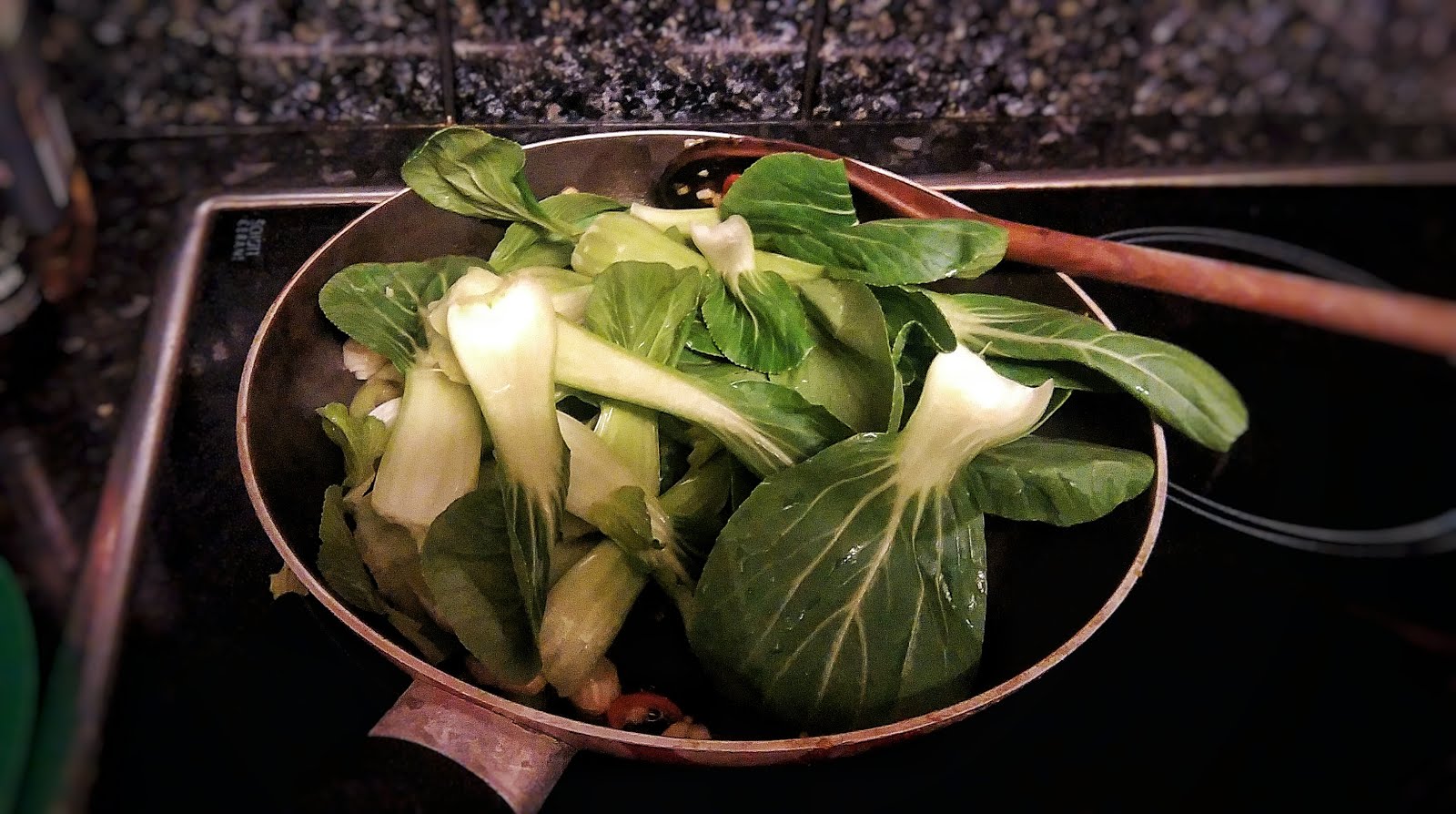
Cook for a few minutes, allowing the pak choi to wilt down.
Once the noodles are cooked and drained, add to the pan along with the sauces and stir fry for a couple of minutes, ensuring the ingredients are evenly coated.
To serve, put the noodles in a circular shape on the plate and place the
guinea fowl pieces on top. Squeeze fresh lime juice over the meat to
taste.
Wednesday, 24 February 2016
Tuesday, 2 February 2016
Sea bass with parsnip purée and parsnip crisps
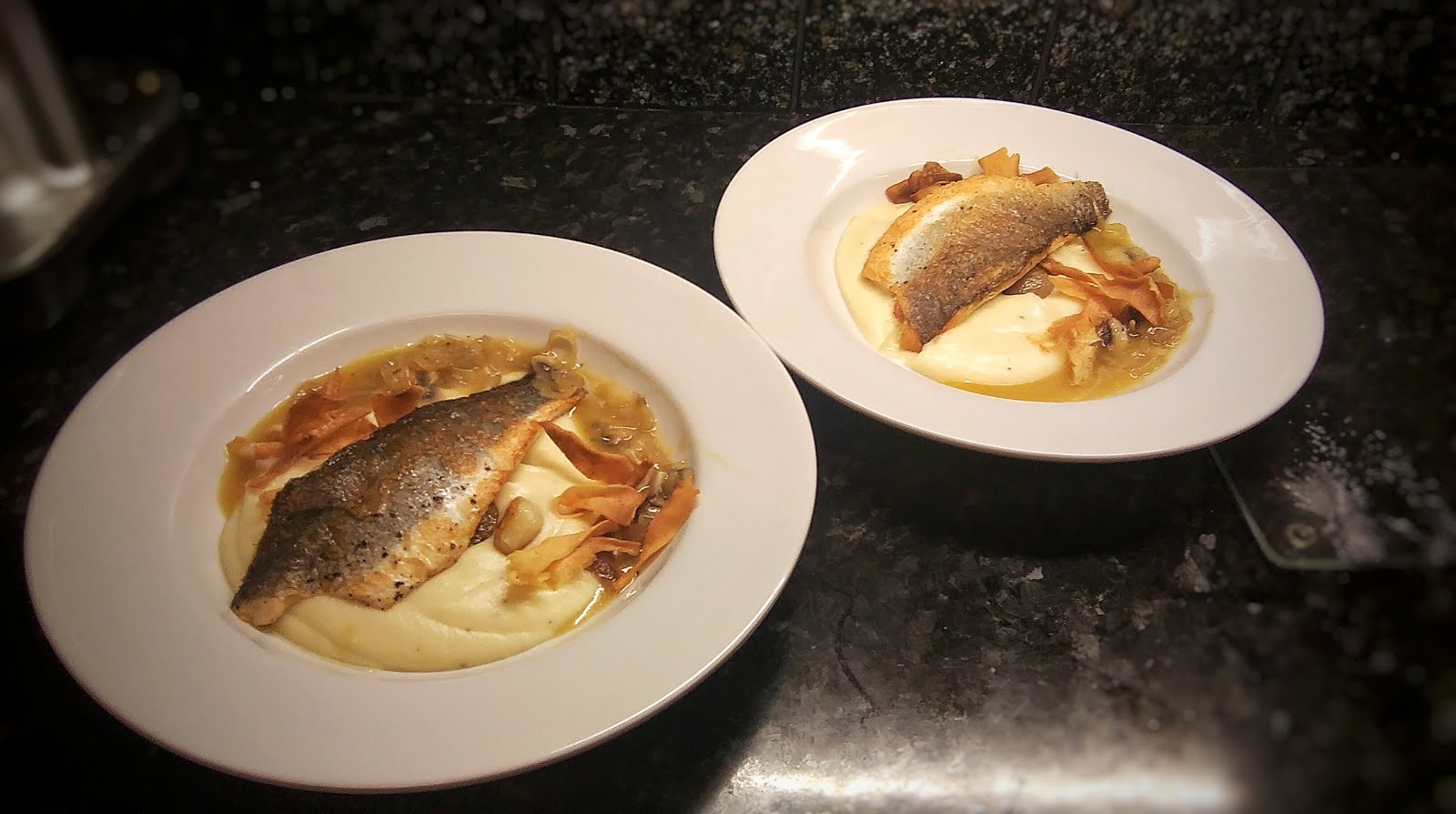
Looking for something a little extra to cook on a Friday night in, we settled on this Michel Roux recipe as published on BBC goodfood. I’m not usually a massive parsnip fan, but this parsnip loaded dish is de-licious! Crunchy parsnip crisps contrast with the creamy parsnip purée, complementing the crispy skin and tender flesh of the sea bass.
In any Michel Roux recipe there’s usually at least one ingredient I don’t have in the cupboard or can’t easily buy in a local store– this time it was veal stock which I switched out for chicken stock. I also didn’t have the fish bones as my sea bass was already filleted, so simply left these out of the method (although I’d advise you to include for depth of flavour if you have them).
My adjusted/simplified version with a couple of tweaks is below. I’ve also removed the caramelised garlic and shallots – my personal preference is against large chunks of shallot/garlic on my plate, no matter how caramelised, and Michel’s method of boiling for 2 minutes, draining and repeating 4 times is a little too tedious for me.
You’ll need:
Olive oil
2 fillets of sea bass
2 shallots, sliced
40g button mushrooms, sliced
½ tbsp white wine vinegar
200ml chicken stock
½ tbsp butter
For the parsnip purée:
2 ½ parsnips
60ml milk
½ tbsp butter
For the parsnip crisps:
½ parsnip
Oil for deep drying (sunflower)
For the the parsnip crisps:
Peel the parsnips and then use a vegetable peeler to slice as thinly as possible.
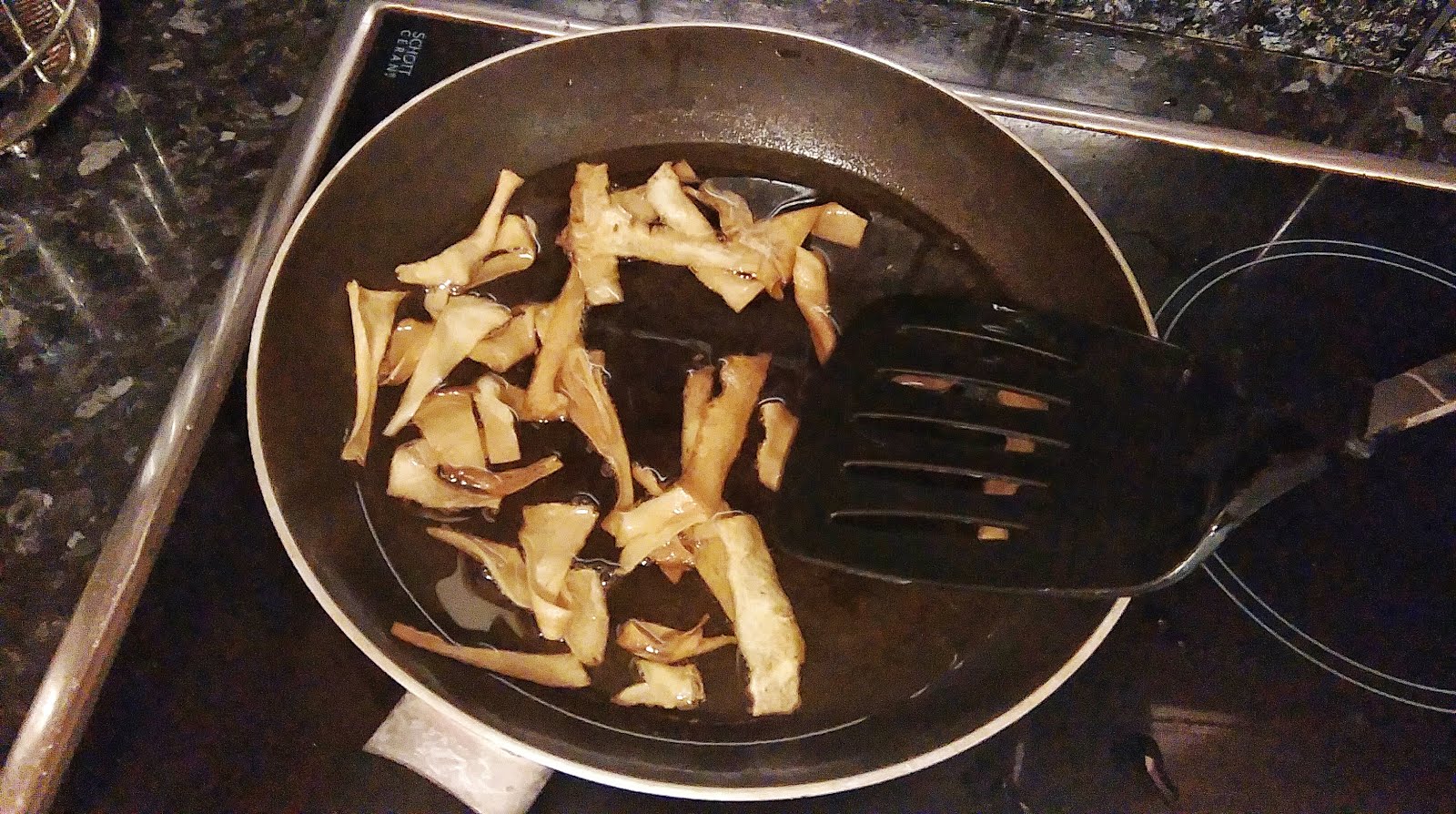
Heat enough oil (a couple of centimetres) in a saucepan to allow you to deep fry the strips of parsnip until very hot.
Drop the parsnips into the hot oil until lightly browned (they will crisp up more once you take them out of the oil).
Remove from oil with a slotted spoon and drain on kitchen towels to absorb the excess fat.
Depending on the size of your frying pan you may need to do this in batches – you only want a single layer of parsnips at a time in the hot oil. Set aside in a dry place until required – you can make up to a day ahead, stored in an air tight container.
For the parsnip purée:
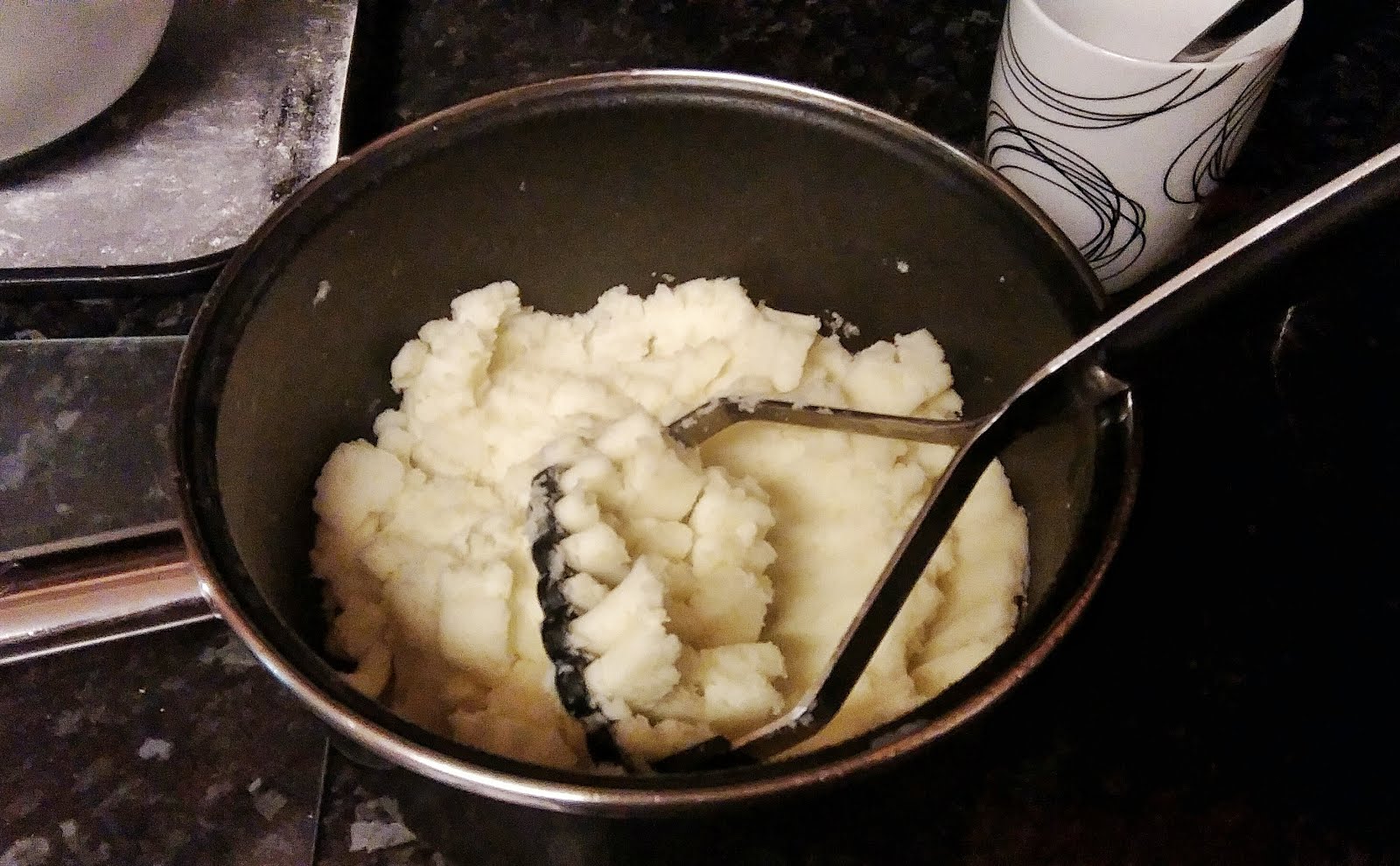
Peel the parsnips and cut into big chunks. Drop into a saucepan of salted, boiling water until tender – about 20 mins.
Drain well, then put in a blender with the butter and some of the milk and blend until smooth: you’re aiming for the consistency of double cream so add more milk as necessary. Season to taste.
For the sauce:
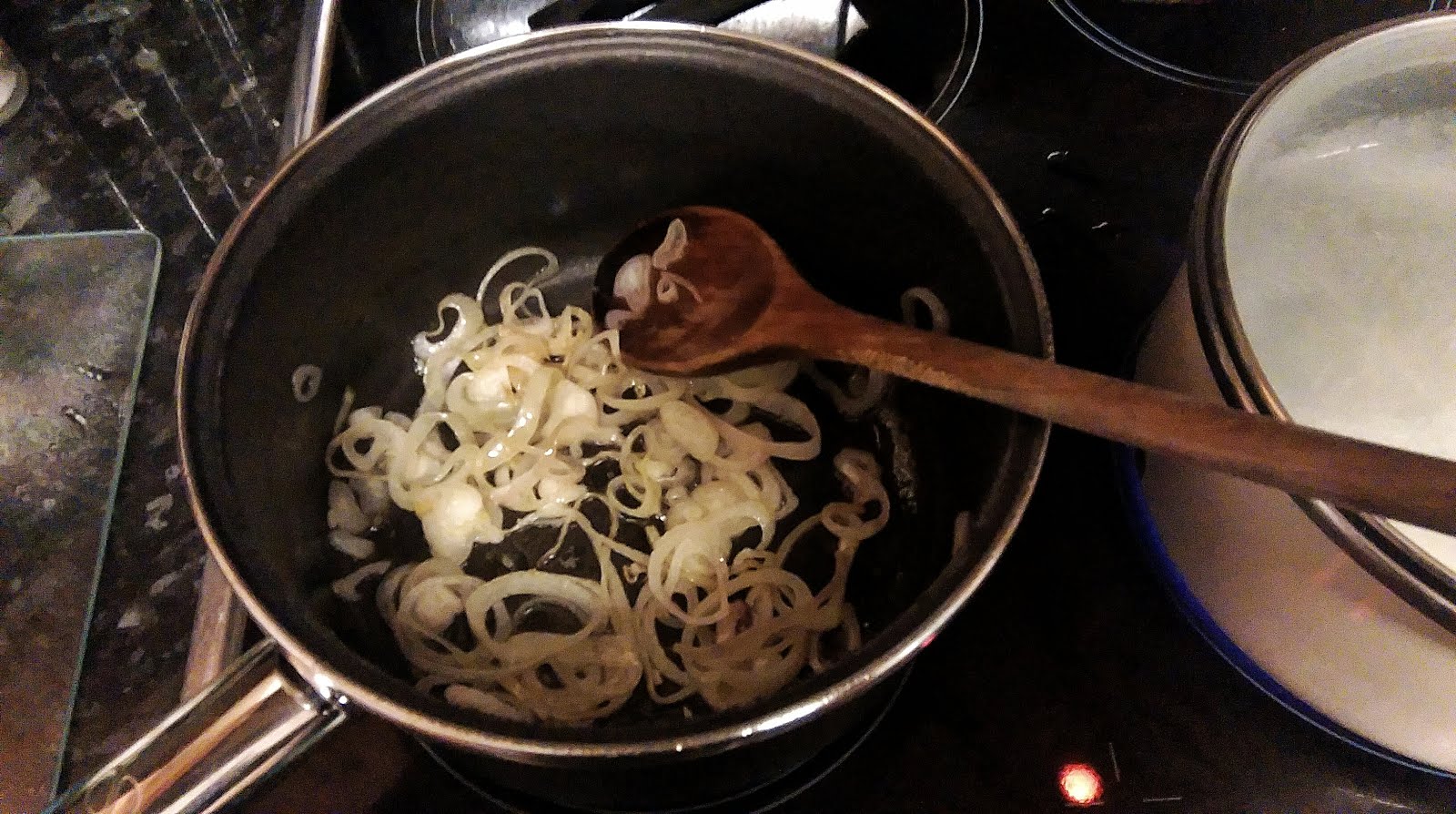
Heat a little olive oil in a saucepan and cook the sliced shallots for 5 mins until softened and golden.
Add the mushrooms and cook for a further 10 mins, stirring occasionally. Add the vinegar and bring to the boil for 3 mins. Now add the stock, season lightly and simmer for 30 mins.
(At this stage Michel advises you to pass the sauce through a fine sieve into a clean pan. I wanted to keep the shallot/mushroom mixture though so I skipped this step.)
Whisk in the butter to thicken.
For the seabass:
Score the skin of the fish with a sharp knife – to help prevent curling during cooking. Season with salt and pepper
Add a few drops of olive oil to a frying pan and heat until shimmering and very hot. Then add the fish, skin side down. Press down on the fish with a spatula if it begins to curl up.
Once the skin is browned (should take around 5 mins), turn the fillets over and cook the other side for a further 1 – 2 mins (timings dependant on the thickness of your fillets).
To serve:
Re-heat the puree if required and spoon on to warmed plates.
Pour the sauce around the purée and place the fish on top.
To complete, sprinkle over a few parsnip chips as a deliciously unhealthy garnish.
Tuesday, 19 January 2016
Homemade gnocchi recipe
A first attempt at homemade gnocchi. This has been on my to do list for a while now after trying the authentic stuff in Italy and the dry, vacuum packed version at home never measuring up! You do need to dedicate some time to prepare these mini Italian dumplings, and I received more than one side-eye from my boyfriend asking ‘all this effort for gnocchi?!’. But it’s worth it even if only to say you’ve done it once. And the taste and texture will always beat the shop bought version (but perhaps not that restaurant in Rome!).
Serves 2
You'll need:
450g potatoes – russet and yukon are good for making gnocchi
1 cup / 150g plain flour
1 egg, beaten
Salt and pepper
Peel and cut potatoes into quarters
Place chopped potatoes in a saucepan and pour in boiling water from your kettle, to cover the potatoes
Generously salt the water
Allow to cook until tender – approx. 25 mins
Once cooked, remove from heat and drain the water from the saucepan. Leave to stand for a couple of minutes and then rice the potato or mash with a potato masher, ensuring no lumps.
Leave the potato to cool.
Turn out onto a surface and spread the potato out slightly. Pour over the beaten egg and sprinkle over approx 100g (two thirds) of the flour. Being careful not to over-knead the mixture, combine the ingredients together with your hands, using a folding motion.
The amount of flour needed will depend on the water content of your potatoes. As you fold, sprinkle more flour over the mixture as required. You need the mixture to hold together and not be too sticky, but you also don’t want it too dry as this will make the gnocchi dense.
Once all ingredients are mixed together, shape the dough into a log shape.
Flour a clean surface and chop a 2 inch slice from the log. Sprinkle the section with flour and roll with your hands into a sausage shape.
Now using a sharp knife, chop 1-1 ½ inch pieces of dough dumpling
To shape the gnocchi:
Using the back of a fork, place a dumpling on the back of a fork and slowly roll the segment down the fork tines. At the same time, use your thumb to press lightly on the dough to form a small indentation on the back.
This step isn’t essential but helps the sauce to cling to the gnocchi.
Place shaped gnocchi dumplings onto a lightly floured baking sheet until ready to cook.
To cook: Drop the gnocchi into a pan of lightly salted, boiling water. Stir once gently with a wooden spoon, being careful not to break up the gnocchi. After a minute or so, the gnocchi will rise to the surface of the water. Allow to cook for approx 20 seconds more, the remove with a slotted spoon and serve with a sauce of your choice.
Sunday, 10 January 2016
Crispy sweet potato fries recipe
Follow these 5 simple steps on how to make oven baked crispy
sweet potato fries.
You’ll need:
2 – 3 large sweet potatoes
1 tablespoon polenta/cornmeal
Paprika
Sunflower oil
Salt to taste
2 – 3 large sweet potatoes
1 tablespoon polenta/cornmeal
Paprika
Sunflower oil
Salt to taste
Preheat oven to 200 degrees c / 390 degrees f
1. Chop: Peel your sweet potatoes and cut them into fry shapes (long and thin). The thinner you cut your fries, the crispier they will be.
Tip: To easily chop your potatoes, cut a thin slice from one side of the potato – this will give you a flat base to work from.
2. Soak: Place your cut fries into a large bowl and cover with water for approx. an hour. This step removes some of the starch from the potatoes, and is going to allow those fries to crisp up on the outside during cooking.
3. Dry: Drain and pat dry with kitchen roll.
4. Season: Sprinkle over the polenta/cornmeal and shake the bowl to give an even coating to all of the fries. Now add 1 tablespoon of sunflower oil and 1 teaspoon of paprika and toss to coat.
5. Bake: Line 2 baking sheets with foil, pour a teaspoon of sunflower oil on to each sheet and use a pastry brush to coat the foil evenly– add more oil if needed (alternatively spritz with non-stick cooking spray).
Lay out the fries on to the sheets in a single layer, making sure they’re not touching.
Place the sheets in the pre-heated oven for 15 minutes.
Remove from the oven and use a spatula to flip the fries over. After flipping ensure single layer is maintained and the fries are not touching. Place the sheets back in the oven for another 10-15 minutes – put the tray that was previously on top at the bottom and vice versa, to ensure even cooking.
Once the fries have crisped up on the outside and are cooked through, remove from the oven and toss with salt to your taste. Serve with your dish of choice.
1. Chop: Peel your sweet potatoes and cut them into fry shapes (long and thin). The thinner you cut your fries, the crispier they will be.
Tip: To easily chop your potatoes, cut a thin slice from one side of the potato – this will give you a flat base to work from.
2. Soak: Place your cut fries into a large bowl and cover with water for approx. an hour. This step removes some of the starch from the potatoes, and is going to allow those fries to crisp up on the outside during cooking.
3. Dry: Drain and pat dry with kitchen roll.
4. Season: Sprinkle over the polenta/cornmeal and shake the bowl to give an even coating to all of the fries. Now add 1 tablespoon of sunflower oil and 1 teaspoon of paprika and toss to coat.
5. Bake: Line 2 baking sheets with foil, pour a teaspoon of sunflower oil on to each sheet and use a pastry brush to coat the foil evenly– add more oil if needed (alternatively spritz with non-stick cooking spray).
Lay out the fries on to the sheets in a single layer, making sure they’re not touching.
Place the sheets in the pre-heated oven for 15 minutes.
Remove from the oven and use a spatula to flip the fries over. After flipping ensure single layer is maintained and the fries are not touching. Place the sheets back in the oven for another 10-15 minutes – put the tray that was previously on top at the bottom and vice versa, to ensure even cooking.
Once the fries have crisped up on the outside and are cooked through, remove from the oven and toss with salt to your taste. Serve with your dish of choice.
Wednesday, 6 January 2016
Shredded duck leg noodle salad
Duck legs have featured religiously on my shopping list for the past 4 years. One of the first meals my boyfriend and I cooked together (by cooked I mean threw in the oven and left for 2 hours) was Nigella’s roasted duck legs and potatoes tray bake, and it's made an almost weekly appearance ever since. Mainly because it’s so easy but also because it.tastes.so.good.
However by the 208th time (RIP ducks, sorry) replicating Nigella’s recipe, it got a tiiiiiiny bit repetitive. It’s still on the trusty meal rotation but we mixed up the devouring of duck legs with this noodle salad recipe.
It’s still a ‘leave em and love em’ recipe, with just a few additional mins required to prep and fry the other ingredients.
Serves: 2
Ingredients
2 x duck legs
Few sprigs of fresh thyme
Salt and pepper
1 red chilli, chopped
Bunch of spring onions, sliced diagonally
Ginger (thumb sized piece), grated or chopped
2 nests of noodles (your choice – udon noodles or egg noodles work well)
Soy sauce
1 tablespoon white rice wine vinegar
Sunflower oil
However by the 208th time (RIP ducks, sorry) replicating Nigella’s recipe, it got a tiiiiiiny bit repetitive. It’s still on the trusty meal rotation but we mixed up the devouring of duck legs with this noodle salad recipe.
It’s still a ‘leave em and love em’ recipe, with just a few additional mins required to prep and fry the other ingredients.
Ingredients
2 x duck legs
Few sprigs of fresh thyme
Salt and pepper
1 red chilli, chopped
Bunch of spring onions, sliced diagonally
Ginger (thumb sized piece), grated or chopped
2 nests of noodles (your choice – udon noodles or egg noodles work well)
Soy sauce
1 tablespoon white rice wine vinegar
Sunflower oil
Preheat oven to 160 degrees c / 320 degrees f
- Season the duck legs with salt and pepper and place in a small roasting tin. Prick the skin all over, to allow the fat to escape during the cooking process, and let a few sprigs of thyme fall over and around the duck.
- Put in the preheated oven for 2 hours; the result will be crispy skin and tender meat falling off the bone.
- Remove the duck from the oven and place the legs on a carving plate to cool. Use two forks to shred the skin and meat from the bone and place in a bowl.
- Boil the kettle and fill a saucepan with enough water to cook your noodles, and add a pinch of salt. Drop your noodles into the water and cook as per packet instructions (eg 5 minutes for udon noodles)
- Meanwhile, heat a tablespoon of sunflower oil in a frying pan and fry the chilli, spring onion and ginger.
- Add a splash of soy sauce and the rice wine vinegar and allow the ingredients to simmer in the pan for a couple of minutes.
- Add the shredded duck and a splash more soy sauce to coat.
- Stir for a minute or so and then once your noodles are cooked, drain and drop them into the pan. Stir everything together and at this stage you can add more soy sauce to your taste.
- Once everything is mixed together evenly, remove from heat and serve with a crisp mixed leaf salad.
Subscribe to:
Posts (Atom)